Every day, students work under constant academic demands – deadlines, exams, and expectations that gradually build over time. In key years such as Year 11, this pressure becomes more intense, often shaping not just academic performance but also how students think, behave, and perceive themselves. From a psychological perspective, academic pressure is not simply a challenge to overcome, but a sustained stressor with wider cognitive and behavioural effects.
One way to understand this is through the Yerkes–Dodson Law, which describes the relationship between stress and performance. Moderate levels of stress can improve focus and alertness, but once stress becomes excessive, performance declines. In many academic environments, students operate beyond this optimal level, which helps explain why high pressure often leads to reduced concentration, mental fatigue, and burnout rather than improved results.
This is closely linked to cognitive load theory, which suggests that working memory has a limited capacity. When students are required to process large amounts of information within short periods of time, this capacity can be exceeded. As a result, learning becomes less effective, with reduced retention and understanding. This creates a contradiction where increased effort does not always lead to improved outcomes.
Academic pressure is also reinforced by the social environment. According to social comparison theory, developed by Leon Festinger, individuals naturally evaluate themselves in relation to others. In school settings, this often takes the form of comparing grades and progress, which can distort self-perception and increase anxiety. Over time, students may begin to associate their academic performance with their overall self-worth.
The effects of this pressure extend further cognition into behaviour. When support systems are limited, students may rely on maladaptive coping strategies as a way to manage stress. These behaviours – such as avoidance or escapism – can be explained through operant conditioning. If a behaviour temporarily reduces stress, it becomes negatively reinforcing and more likely to be repeated.
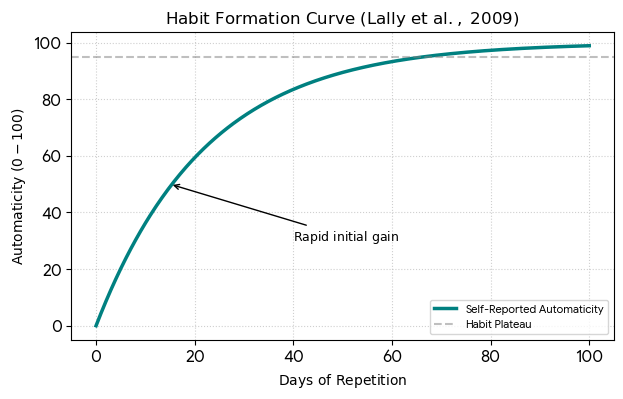
Research by Phillippa Lally et al. (2009) supports this idea, showing that repeated behaviours gradually become automatic over time. In the context of academic stress, this suggests that short-term coping mechanisms can develop into longer-term habits, and in some cases, patterns resembling addictive behaviour. Rather than addressing the source of stress, these behaviours function as a form of psychological escape, particularly when students lack adequate support.
In addition, prolonged academic pressure can influence motivation itself. Self-determination theory suggests that intrinsic motivation – engaging in learning for personal interest – can be weakened by strong external pressures such as grades or expectations. As a result, students may become more outcome-focused, reducing engagement and increasing stress.
Overall, academic pressure operates as more than an educational demand; it is a psychological process that affects how students think, cope, and develop over time. Understanding these mechanisms highlights that the impact of pressure is not just
 between the thoughts
Leave a comment